
MAE Seminar: JPL’S Thermal Control Technologies for Future Space Science Exploration
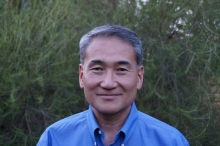
Thermal Technologist
Jet Propulsion Laboratory
California Institute of Technology
Abstract: In JPL’s continued efforts toward robotic space exploration and science missions, demands are placed on the thermal control system to accommodate extreme environments while providing science-enabling temperature stability. A survey of ongoing projects and missions is discussed, along with the unique thermal control challenges each presents. A discussion is then given on the direction of thermal control technologies needed to enable the lab’s future missions. A common theme among many of the technologies is two-phase (liquid/vapor) thermal control. A specific case of a how a hybrid pumped two-phase system can provide the necessary isothermicity and temporal stability for increased science signal-to-noise is discussed in detail.
Bio: Eric Sunada is the lead thermal technologist for JPL’s propulsion, thermal and materials engineering section. He has 30 years of spacecraft thermal engineering experience supporting missions ranging from Earth orbiters, surface rovers and outer planet exploration. Sunada’s interests are in the development of enabling technologies for JPL’s spacecraft to extreme environments. Specific research areas include two-phase thermal control systems and the accompanying use of advanced manufacturing technologies that enable novel designs. He is a proud graduate of UCI where he received his bachelor's degree in mechanical engineering. He later earned his master's degree from UCSD.
