
MAE 298 seminar: Mechanics meets AI: Neuromuscular function and learning in animals and robots
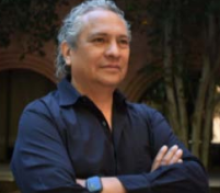
Dean’s Professor of Biomedical Engineering Department of Biomedical Engineering Division of Biokinesiology & Physical Therapy
University of Southern California, Los Angeles, California
Abstract: Lifelong learning is a defining factor of neural systems. Understanding the mechanisms by which animals learn quickly, autonomously and driven by their own limited experience would empower approaches to behavior, disability and rehabilitation. This knowledge can also drive the emerging field of bio-robotics. We are developing "robots with a nervous system " by selecting fundamental neurophysiological mechanisms-as understood today-and implementing them as physiologically-faithful algorithms and circuits. I will present examples ranging from high-level algorithms for autonomous learning of locomotor and dexterous manipulation, to lowlevel spinal circuits for muscle tone and stretch reflexes. This will highlight the importance of brain-body coevolution in biological systems that holds valuable lessons for robotics based on the co-design of learning algorithms, neuromorphic controllers and bio-inspired bodies. References: · Azadjou H, Marjaninejad A, Valero-Cuevas FJ Play it by Ear: A perceptual algorithm for autonomous melodious piano playing with a bio-inspired robotic hand. bioRxiv, 2024, In Press Royal Society Interface · Niyo G, Almofeez LI, Erwin A, Valero-Cuevas FJ A computational study of how an α-to γ-motoneurone collateral can mitigate velocity-dependent stretch reflexes during voluntary movement Proceedings of the National Academy of Sciences, 2024 · Ojaghi P, Mir R, Marjaninejad A, Erwin A, Wehner M, Valero-Cuevas FJ Curriculum is more influential than haptic feedback when learning object manipulation Science Advances, 2025 · Kudithipudi D, et al. Biological underpinnings for lifelong learning machines Nature Machine Intelligence, 2022 · Berry JA, Valero-Cuevas FJ. Sensory-Motor Gestalt: Sensation and Action as the Foundations of Identity, Agency, and Self Artificial Life Conference Proceedings, 2020 · Marjaninejad A, Urbina-Meléndez D, Cohn BA, and Valero-Cuevas FJ Autonomous functional movements in a tendon-driven limb via limited experience Nature Machine Intelligence, 2019 Bio: I attended Swarthmore College from 1984-88 where I obtained a BS degree in Engineering. After spending a year in the Indian subcontinent as a Thomas J Watson Fellow, I joined Queen’s University in Ontario and worked with Dr. Carolyn Small. The research for my Master’s Degree in Mechanical Engineering at Queen’s focused on developing non-invasive methods to estimate the kinematic integrity of the wrist joint. In 1991, I joined the doctoral program in the Design Division of the Mechanical Engineering Department at Stanford University. I worked with Dr. Felix Zajac developing a realistic biomechanical model of the human digits. This research, done at the Rehabilitation R & D Center in Palo Alto, focused on predicting optimal coordination patterns of finger musculature during static force production. After completing my doctoral degree in 1997, I joined the core faculty of the Biomechanical Engineering Division at Stanford University as a Research Associate and Lecturer. In 1999, I joined the faculty of the Sibley School of Mechanical and Aerospace Engineering at Cornell University as Assistant Professor, and was tenured in 2005. In 2007, I joined the faculty at the Department of Biomedical Engineering, and the Division of Biokinesiology & Physical Therapy at the University of Southern California as Associate Professor; where I was promoted to Full Professor in 2011. In 2013 I was elected Senior Member of the IEEE, and in 2014 to the College of Fellows of the American Institute for Medical and Biological Engineers. In 2018, I was awarded an Honorary Doctorate in Biology from Swarthmore College, and in 2023 I was inducted into the National Academy of Inventors. In 2025 I was appointed as Dean’s Professor of Biomedical Engineering.
Share

Upcoming Events
-
EECS Seminar: Printed Electronic Skin for Robots and Interactive Systems
-
MAE 298 Seminar:Ellipse Synthesis and the Computational Design of Robot Geometries
-
CBE 298 Seminar: Do I Belong Here? Addressing Imposter Syndrome in Graduate School
-
CEE Ph.D. Defense Announcement: Detection and Monitoring of Viruses in Water for Public Health & Environmental Engineering Applications
-
MSE 298 Seminar: Challenges and Opportunities Using AI to Accelerate Materials Discovery and Process Optimization