
EECS Seminar: Programming Light Diffraction for Information Processing and Computational Imaging
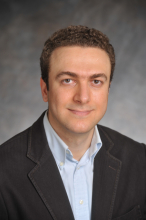
Chancellor’s Professor and the Volgenau Chair for Engineering Innovation
Department of Electrical and Computer Engineering
University of California Los Angeles
Abstract: I will discuss the integration of programmable diffraction with digital neural networks. Diffractive optical networks are designed by deep learning to all-optically implement various complex functions as the input light diffracts through spatially engineered surfaces. These diffractive processors integrated with digital neural networks have various applications, e.g., image analysis, feature detection, object classification, computational imaging and seeing through diffusers, also enabling task-specific camera designs and new optical components for spatial, spectral and temporal beam shaping and spatially-controlled wavelength division multiplexing. These deep learning-designed diffractive systems can broadly impact (1) optical statistical inference engines, (2) computational camera and microscope designs and (3) inverse design of optical systems that are task-specific. In this talk, I will give examples of each group, enabling transformative capabilities for various applications of interest in e.g., autonomous systems, defense/security, telecommunications as well as biomedical imaging and sensing.
Short Bio: Aydogan Ozcan is the Chancellor’s Professor and the Volgenau Chair for Engineering Innovation at UCLA. He is also the associate director of the California NanoSystems Institute. Ozcan is an elected member of the U.S. National Academy of Engineering (NAE) and the European Academy of Sciences and Arts, as well as a fellow of the U.S. National Academy of Inventors (NAI) and holds >85 issued/granted patents in microscopy, holography, computational imaging, sensing, mobile diagnostics, nonlinear optics and fiber-optics, and is also the author of one book and the co-author of >1350 peer-reviewed publications in leading scientific journals/conferences. Ozcan has received major awards, including the Presidential Early Career Award for Scientists and Engineers (PECASE), International Commission for Optics ICO Prize, Dennis Gabor Award (SPIE), Joseph Fraunhofer Award & Robert M. Burley Prize (Optica), Keith Terasaki Innovation Award, SPIE Biophotonics Technology Innovator Award, Rahmi Koc Science Medal, SPIE Early Career Achievement Award, Army Young Investigator Award, NSF CAREER Award, NIH Director’s New Innovator Award, Navy Young Investigator Award, IEEE Photonics Society Young Investigator Award and Distinguished Lecturer Award, National Geographic Emerging Explorer Award, National Academy of Engineering The Grainger Foundation Frontiers of Engineering Award and MIT’s TR35 Award for his seminal contributions to computational imaging, sensing and diagnostics. Ozcan is a fellow of Optica, AAAS, SPIE, IEEE, AIMBE, RSC, APS and the Guggenheim Foundation, and is a Lifetime Fellow Member of Optica, NAI, AAAS, SPIE and APS. Ozcan is also listed as a highly cited researcher by Web of Science, Clarivate.
Share

Upcoming Events
-
EECS Seminar: Steering Diffusion Models for Generative AI, From Multimodal Priors to Test-Time Scaling
-
MAE 298 SEMINAR: Hypersonic Viscous Aerothermochemistry - External Aerothermodynamics and Scramjet Fuel-Air Mixing
-
CBE 298 Seminar: Finding Catalysts of Gut Reactions - The Gut Microbiota in Disease Onset and Treatment
-
CEE Seminar: Confirming a Critical Foundation of Global Warming - Direct Observational Evidence from Space of the Impact of CO2 Growth on Infrared Spectra
-
CBE 298 Seminar: Teaching Transport Phenomena Through Observation - From Einstein’s Tea Leaves to Dissolving Skittles