
Curing disorders in the brain: Dion Khodagholy
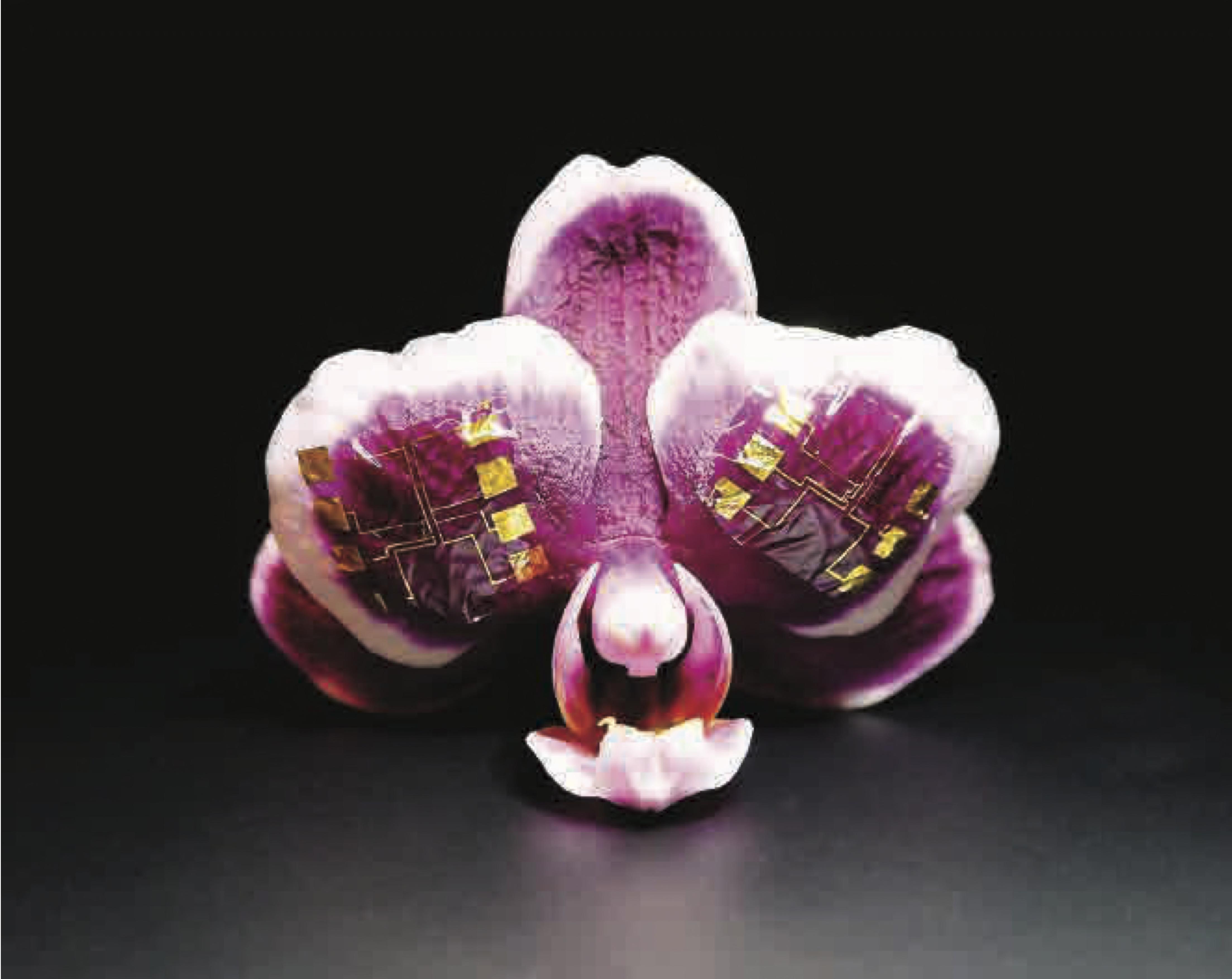
Sept. 28, 2026- Imagine placing a neuroelectronic — a soft, transparent film with gold conductors — on a child’s brain and using it to cure that child of epilepsy.
That is the vision driving Dion Khodagholy, associate professor of electrical engineering and computer science at the UC Irvine Samueli School of Engineering. His lab has created the NeuroGrid, a conformable neuroelectronic that can conform to the brain and detect its signals.
“It can record individual neurons firing from the surface of the brain without penetrating inside,” said Khodagholy. “This is something practically no other device can do — others need to penetrate.”
A Vision to Cure Epilepsy in Children
Epilepsy is one of the few neurological disorders that has an electrode graphic signature that can be tracked and identified.
Khodagholy’s engineering expertise led him to create the NeuroGrid using a similar fabrication process that is used for high density electronics and CPUs. “As an electrical engineer, seeing for the first time those electrical signals was very fascinating,” said Khodagholy.
The reason the NeuroGrid delivers higher resolution data is that it is made of conducting polymer based electrods that efficiently converte ions, the charge carrier of body to electrons.
“The NeuroGrid is even lighter and more flimsy than the brain matter itself,” he said. “It is able to survey the brain while sitting on top of it.”
Khodagholy’s neuroelectronics have been implanted in adults since 2014. They have been able to produce higher resolution data than existing devices and have been used in ten hospitals nationwide. But his next goal is to use it to correct epilepsy in the developing child’s brain.
We believe that by being able to pinpoint where the epilepsy is originating from during a child’s development, there is a high chance we can correct it,” Khodagholy said.
It was placed on the brain of a pediatic participant with epilepsy for the first time in 2026, marking a major milestone for their lab.
A Smarter, Closed-Loop Alternative to Deep Brain Stimulation
His lab works closely with partners at the UCI School of Medicine and the Children’s Hospital of Orange County. The NeuroGrid with closed-loop cabability is first fabricated in the UCI clean room, Integrated Nanosystems Research Facility (INRF), before it is carefully packaged and bonded to electronics that are needed for amplification. The lab has placed these active devices on the brain regions near where the epilepsy is arising from. It detected signals in real time and brought timed electrical stimulation to protect the health brain regions and improve memory in rodents that had epilepsy.
This closed-loop system is more advanced than existing devices like deep brain stimulation (DBS) which stimulates the brain continuously in one location. That’s because it is able to record brain activity in real time, identify unwanted activity patterns and deliver precise electrical stimulation to suppress it.
Khodagholy hopes that the NeuroGrid can eventually be used in humans to correct the pathological activity of epilepsy in patients. He believes the device could be used to cure epilepsy in children, whose brains are more malleable, before the disease persists into adulthood.
- Natalie Tso
